Supply and Demand
How supply, demand and prices interact to shape almost every price in the economy.
What is supply and demand?
Almost every price in an economy is influenced by two forces: supply and demand.
Supply is how much of a product or service is available.
Demand is how much people want to buy.
Prices help bring these two forces into balance.
Why do prices change?
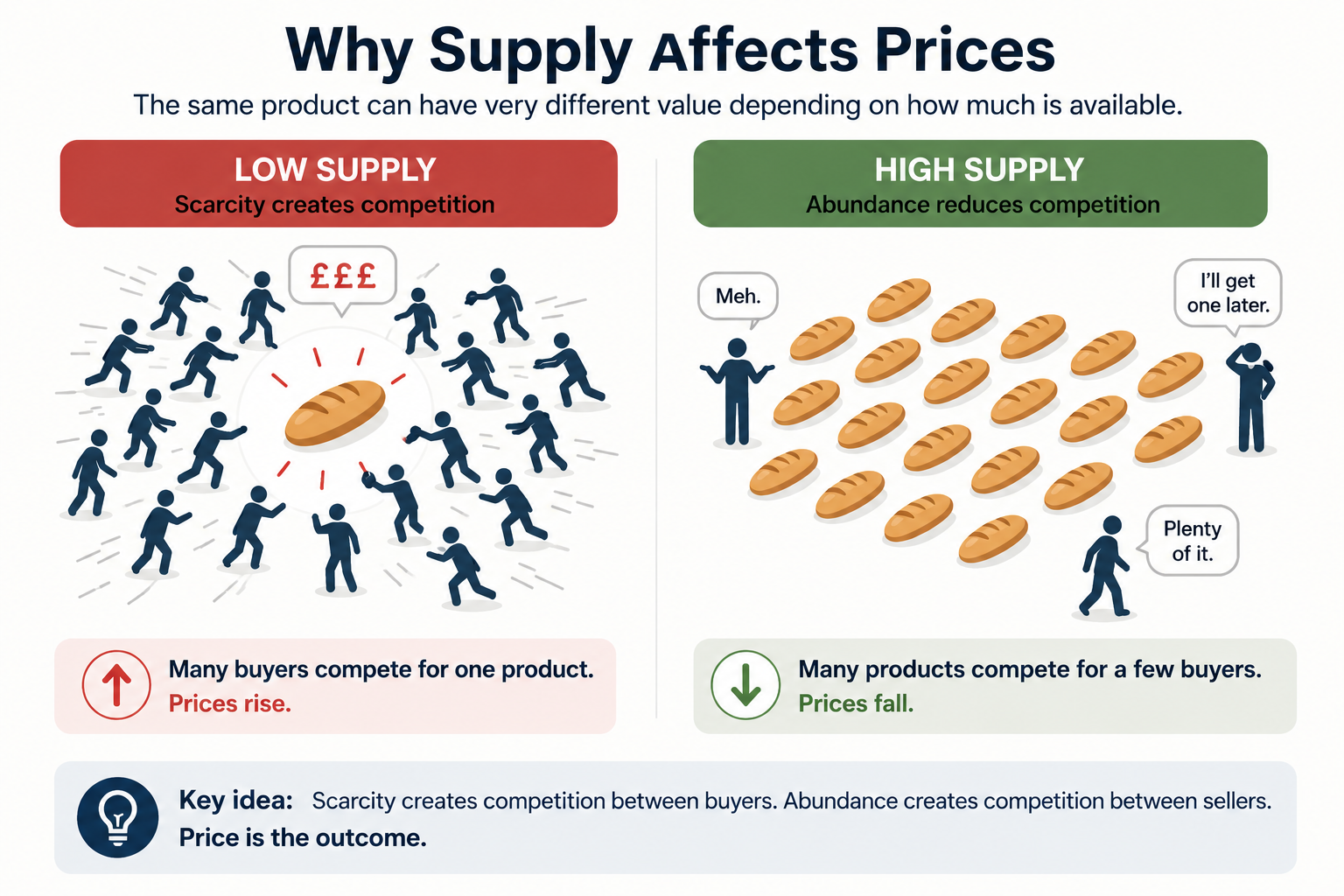
Imagine a bakery makes 100 loaves of bread each day.
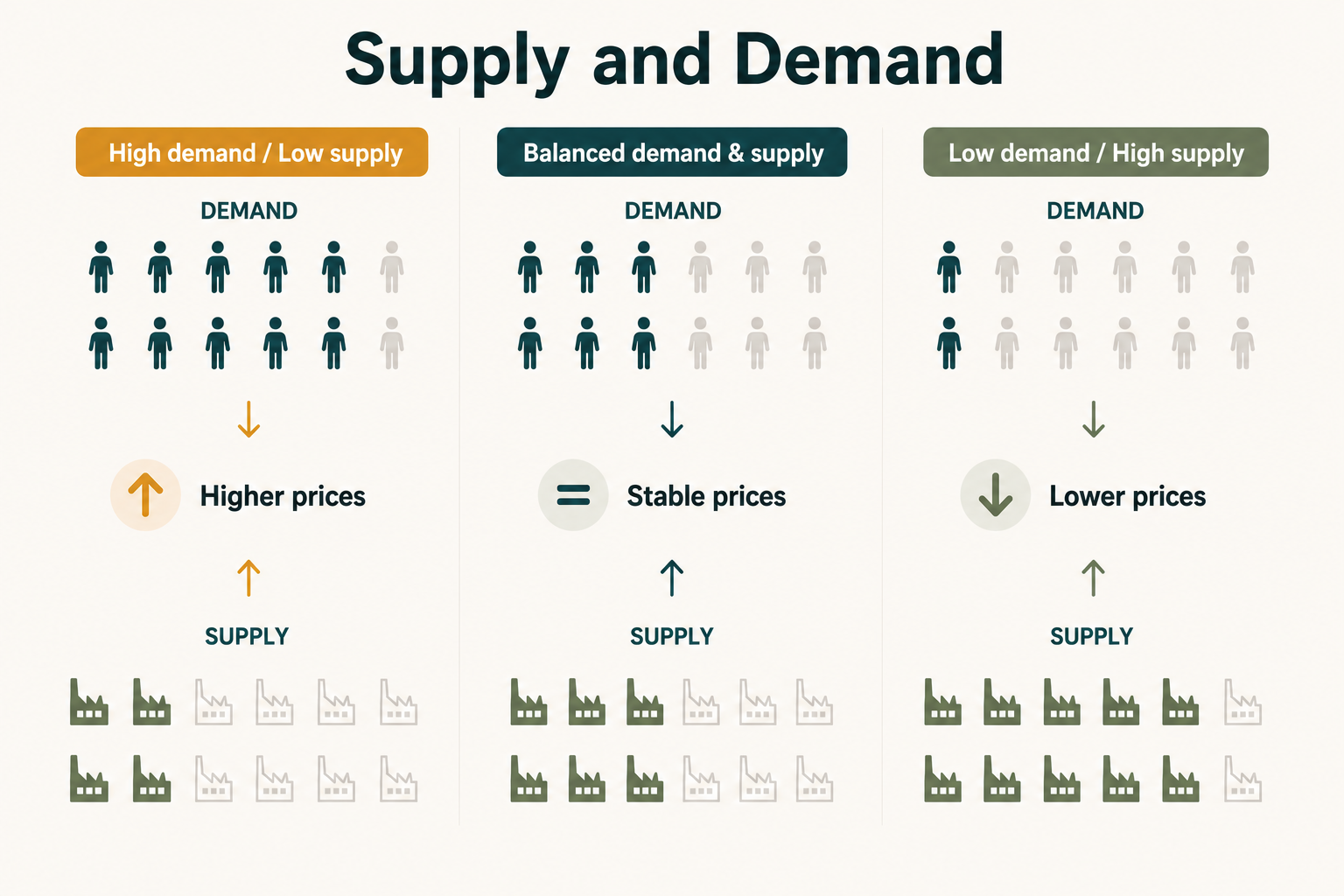
If around 100 people want to buy a loaf, the price is likely to stay about the same.
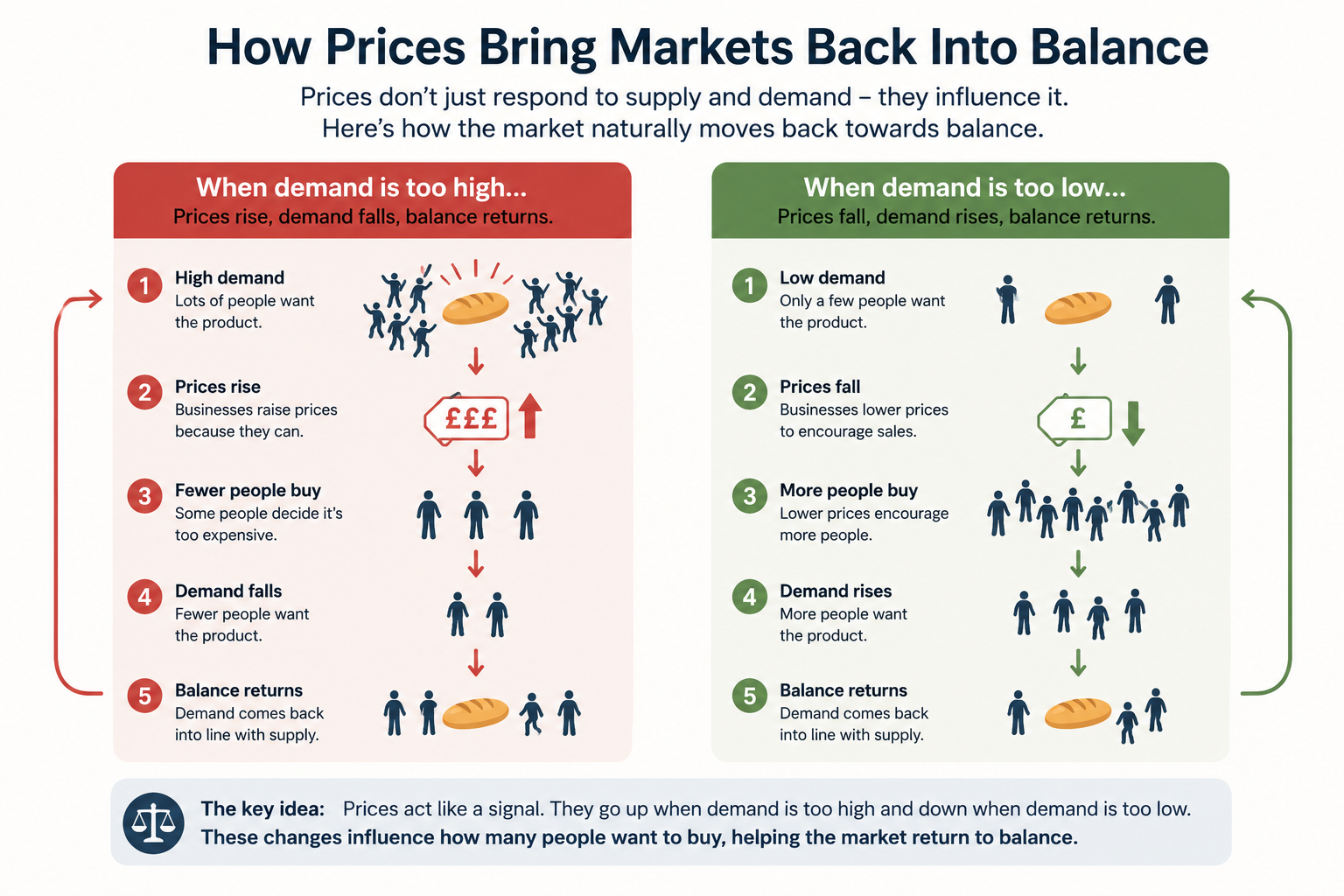
Now imagine 200 people want a loaf, but the bakery can still only make 100.
The bakery can’t make more bread overnight. Because there are more customers than loaves, it knows it can charge more and still sell every loaf.
Some people decide the bread is no longer worth the higher price and choose not to buy it.
As demand falls, the number of people wanting a loaf moves closer to the number available.
Now imagine the opposite.
The bakery still makes 100 loaves, but only 60 people want one.
If nothing changes, 40 loaves will go unsold. The bakery has already paid to make that bread, so every unsold loaf costs it money.
To avoid that waste, it lowers its price to encourage more people to buy.
As demand increases, more bread is sold and the market moves back towards balance.
Prices are the market’s way of helping supply and demand return to balance.
One important point is that prices don’t just respond to supply and demand — they also influence them.
When prices rise, some people decide not to buy.
When prices fall, more people decide they can afford to buy.
This is one of the ways markets naturally move back towards balance.
What affects supply?
Many things can change supply.
For example:
- A poor harvest may reduce the amount of wheat available.
- A factory breakdown may reduce production.
- A war may interrupt global trade.
- New technology may allow businesses to produce more.
When supply falls but demand stays the same, prices often rise because there are fewer products available.
When supply increases but demand stays the same, prices often fall because there are more products available than people want to buy.
What affects demand?
Demand changes whenever people’s willingness or ability to buy changes.
For example:
- Higher incomes often increase demand.
- Lower prices often encourage more people to buy.
- Fashion trends can make products more popular.
- Changes in interest rates can affect how much people spend.
- Expectations about future prices can also influence demand.
When demand increases but supply stays the same, prices often rise until fewer people are willing to buy.
When demand falls but supply stays the same, prices often fall until more people are willing to buy.
Why does supply and demand matter?
Supply and demand help explain why prices change throughout the economy.
They influence the cost of everyday products, houses, fuel, electricity, holidays and thousands of other things that people buy.
Understanding supply and demand also makes it much easier to understand topics such as inflation, housing markets and economic growth.
Once you understand that prices help bring supply and demand back into balance, many other parts of economics become much easier to understand.
Key points
- Supply is how much of a product or service is available.
- Demand is how much people want to buy.
- Prices help bring supply and demand into balance.
- Prices don’t just respond to supply and demand — they also influence them.
- When demand is greater than supply, prices usually rise until fewer people are willing to buy.
- When supply is greater than demand, prices usually fall until more people are willing to buy.